
At the invitation of Tribhuvan University's Institute of Science and Technology in Nepal, Prof. QIU Dunlian, Executive Editor of the Journal of Mountain Science (JMS), and Dr. WANG Yang, Editor of JMS, from the Institute of Mountain Hazards and Environment (IMHE), Chinese Academy of Sciences (CAS), held a three-day scientific writing workshop for teachers and students of Tribhuvan University at the Chinese Academy of Science’s Kathmandu Center of Research and Education (KCRE) in Nepal on November 24 to 26.
Over 50 teachers and students from the university participated in this training.
At the beginning of the training, Prof. QIU Dunlian systematically introduced Journal of Mountain Science about the aim and scope, manuscript requirements and submission procedure, journal development trends and international influence, helping teachers and students fully understand the journal's characteristics and submit articles accordingly.
Subsequently, the two editors gave teaching sessions on the writing norms and publication process of scientific papers, focusing on explaining academic ethics and the key points for preventing academic misconduct. To guide the participants for skilled writing, they lectured each section of a scientific paper step by step, from title formulation, structural abstract writing, keyword extraction, logical construction of introductions, study area and methodology description, objective presentation of results, as well as deepening discussions and conclusions, providing practical guidance from an editorial perspective.
During the lecture, they combined typical cases to analyze common issues and improvement paths in paper writing, transforming abstract writing principles into concrete practical guidelines.
This training not only strengthened the academic ethics awareness of participating teachers and students, solidified the foundation of scientific paper writing, but also highlighted key points in writing different sections of papers through positive and negative case comparisons. It provided targeted suggestions from the perspective of journal editors, effectively enhancing the capabilities of teachers and students in academic expression and international submission.
Active interaction could be seen between the editors and the participants.
The training has received unanimous praise from participating teachers and students. They expressed that the course content closely addressed common challenges in paper writing and publication and hope for a series of similar training activities in the future.
As a concrete measure by IMHE, CAS to deepen China-Nepal cooperation in mountain sciences, this training based on the KCRE (a "Belt and Road" academic bridge in South Asia) not only built a bridge for academic exchanges between the two sides but also provided strong support for Tribhuvan University in cultivating versatile talents with both research capabilities and international academic expression.
Looking ahead, IMHE will continue to use academic journals as a platform, through customized courses, online seminars, and other forms, to deepen academic writing exchanges in the Pan-Himalayan region, promote the global sharing of mountain science research achievements, and contribute to the implementation of regional sustainable development strategies.
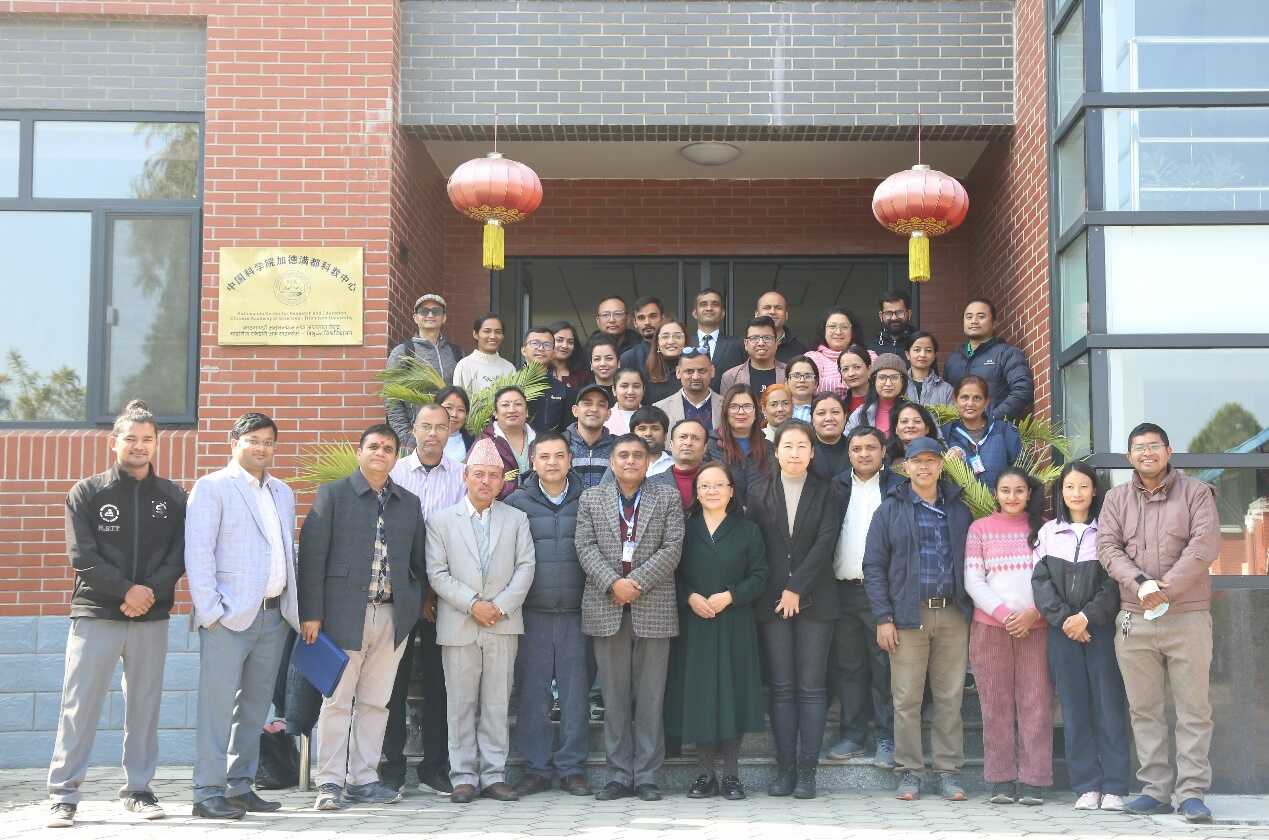
A group photo (Image by QIU Dunlian)
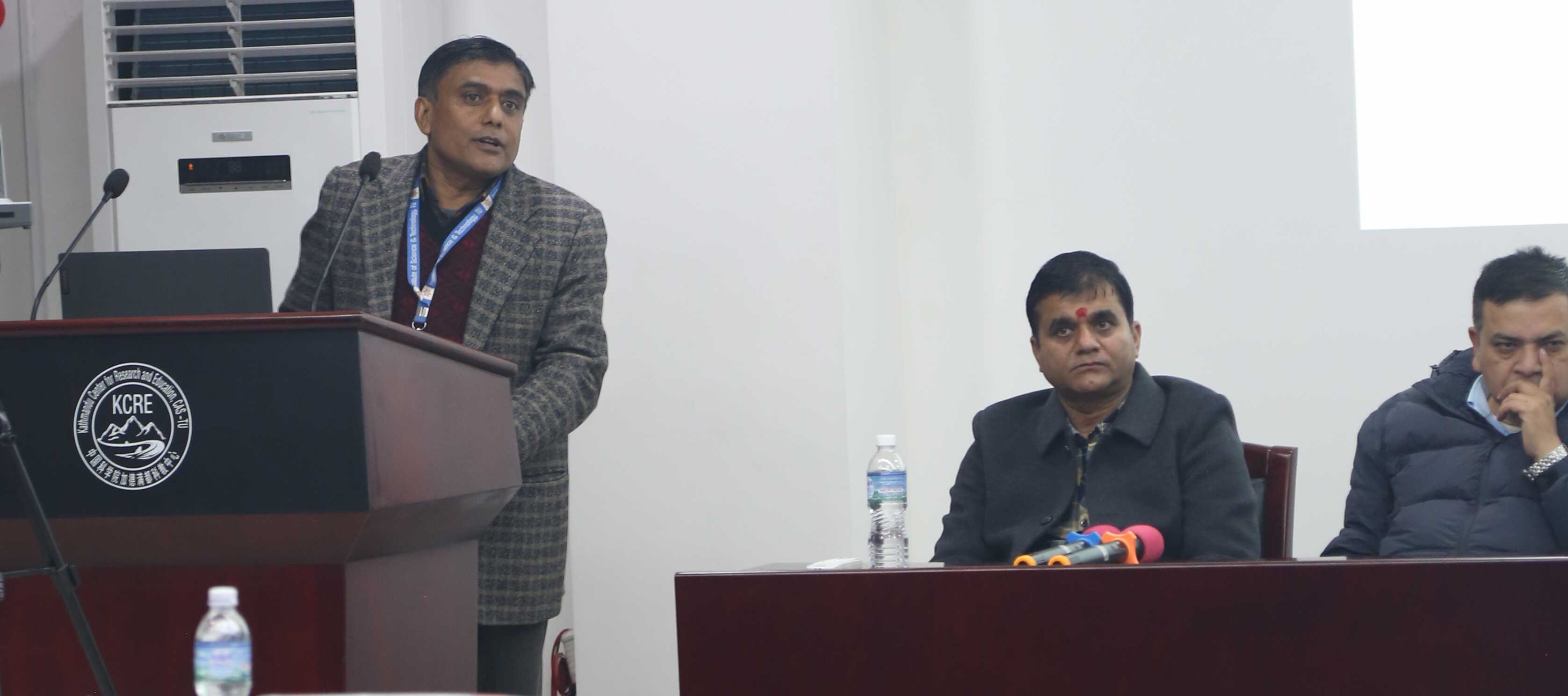
Professor Shankar Prasad Khanal, the dean of Institute of Science and Technology, Tribhuvan University is making a speech. (Image by QIU Dunlian)
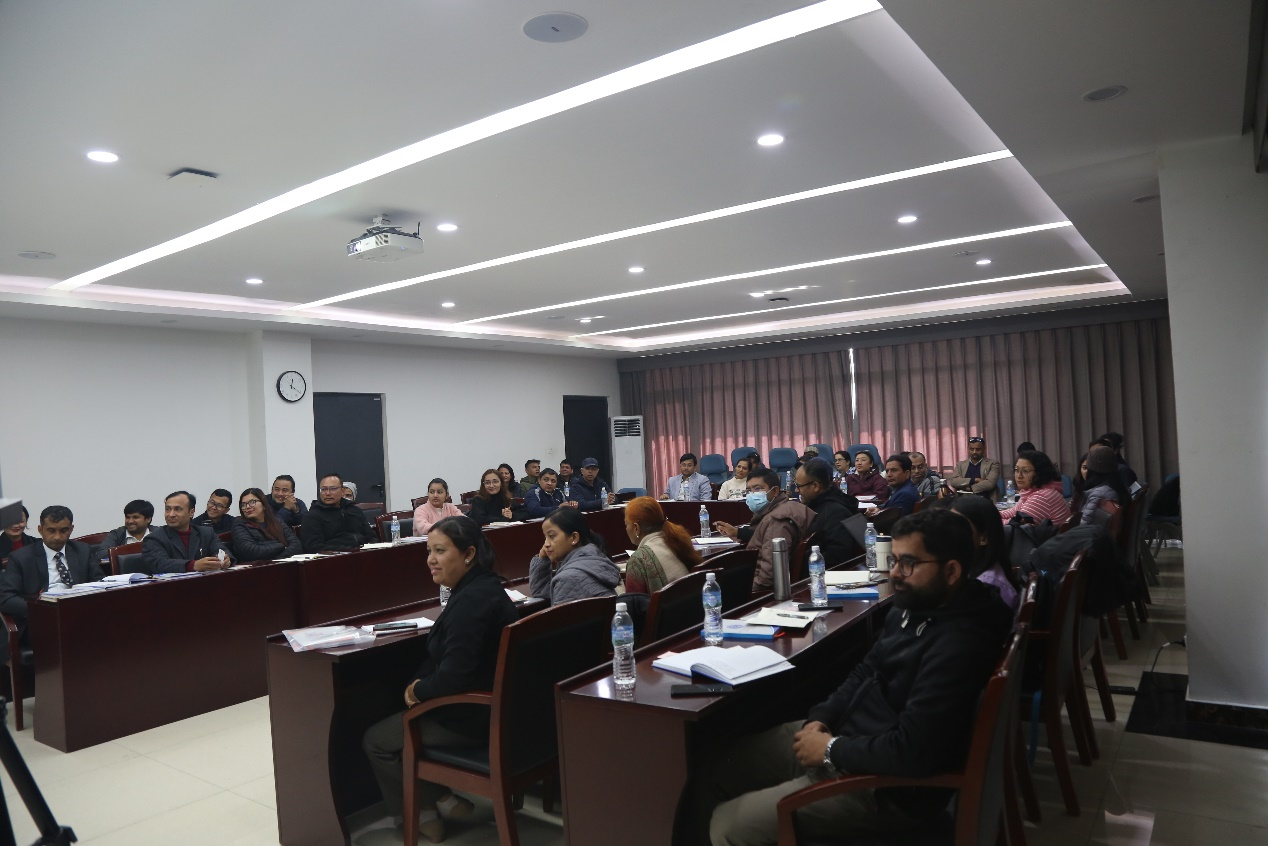
Participants in the training (Image by QIU Dunlian)
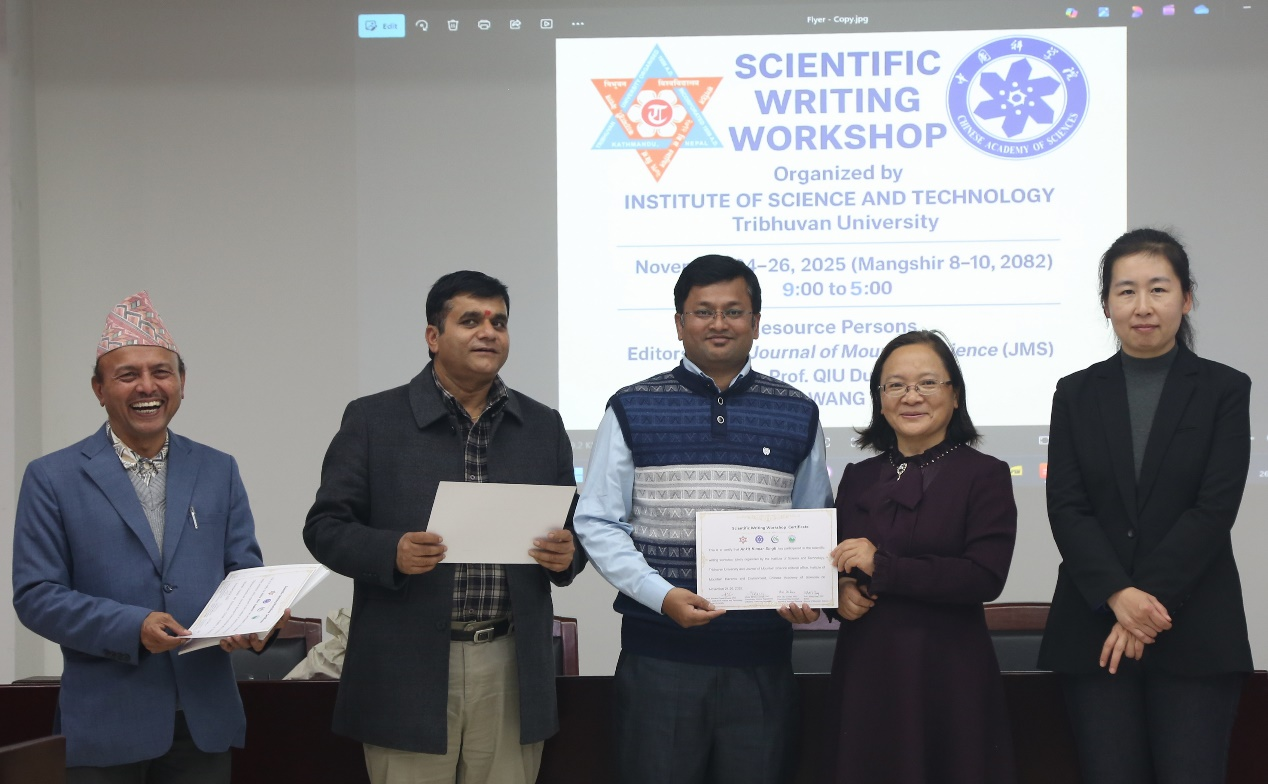
To issue training completion certificates to participants (Image by QIU Dunlian)
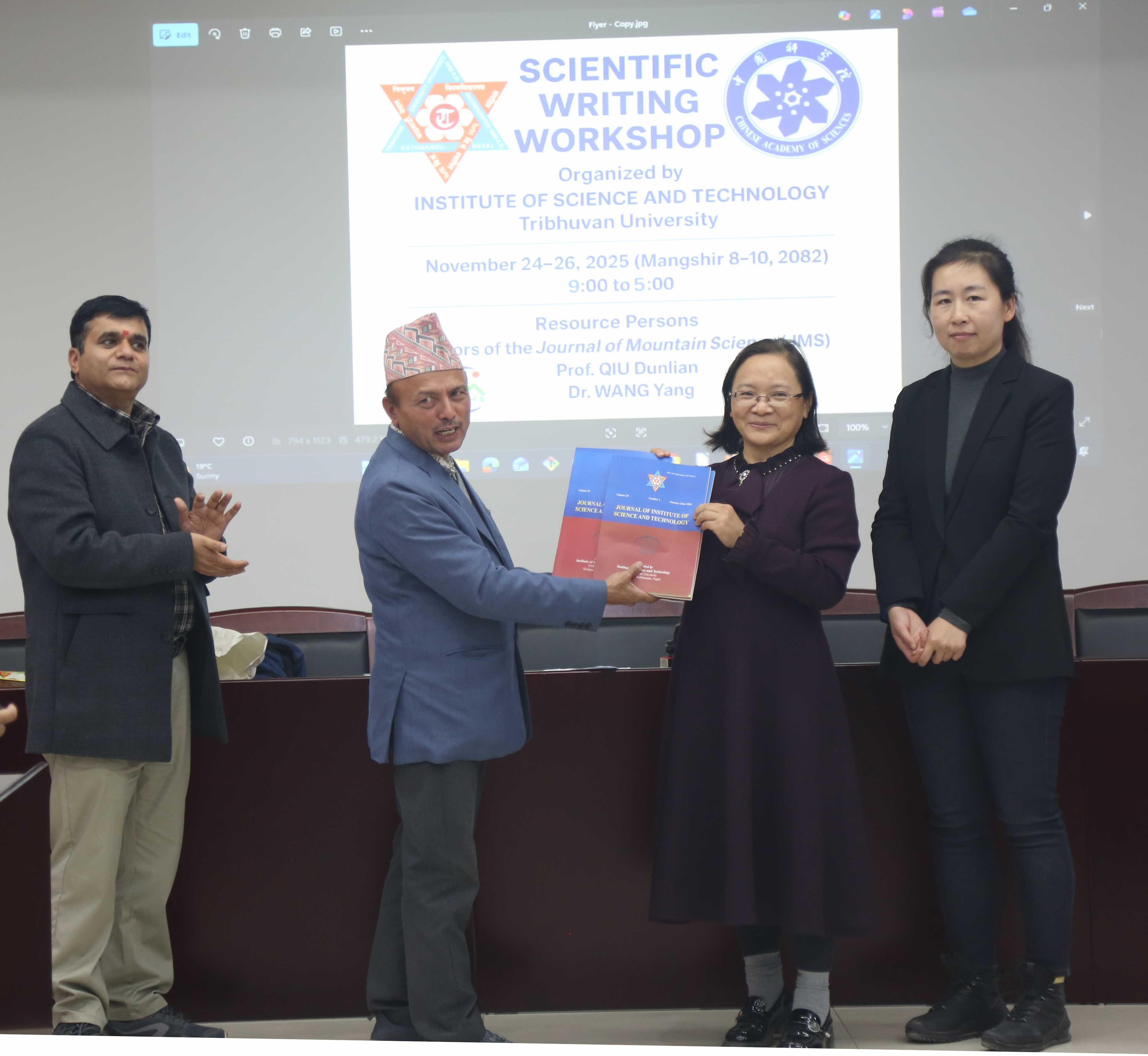
Dr. Chitra Bahadur Baniya, an editorial board member of Tribhuvan University's academic journal Journal of Institute of Science and Technology, is presenting the journal to QIU Dunlian, the executive editor in chief of Journal of Mountain Science. (Image by QIU Dunlian)