
Ice avalanches have become an increasingly prominent cryosphere hazard on the Tibetan Plateau under the background of global warming, posing significant threats to regional water resources, infrastructure, and ecological environments. In recent years, climate warming has accelerated glacier instability and triggered several catastrophic ice avalanche events. However, the long-term variations and climatic drivers of ice avalanche activities across the Tibetan Plateau remain poorly understood.
To address this scientific challenge, a research team led by Prof. KANG Shichang from the Institute of Mountain Hazards and Environment, Chinese Academy of Sciences, integrated historical records, remote sensing observations, and environmental datasets to establish an inventory of ice avalanche events across the Tibetan Plateau from 1960 to 2020. The team systematically investigated the spatiotemporal patterns of ice avalanche activities and their controlling factors.
The results show that 59 ice avalanche events were documented across the Tibetan Plateau during the past six decades, mainly distributed in the southeastern, southern, northwestern, and northeastern regions. Among these events, southeastern Tibet experienced the highest frequency, accounting for 42.1% of the total recorded events.
Further analysis revealed distinct climatic controls on ice avalanche activities in different regions of the Tibetan Plateau. Ice avalanches in the western and northwestern regions were primarily influenced by freeze–thaw cycles, while those in the northeastern region were mainly controlled by temperature variations. In contrast, ice avalanche activities in the southern and southeastern regions were driven by the combined effects of rising temperature and increasing precipitation. These findings highlight the regionally differentiated climatic mechanisms governing ice avalanche occurrence and suggest that glacier instability and ice avalanche risks, particularly in southeastern Tibet, may increase under future climate warming scenarios.
This study provides new insights into the mechanisms underlying ice avalanche formation across the Tibetan Plateau and High Mountain Asia, offering scientific support for disaster risk assessment and future projections of cryospheric hazards.
This research was supported by the Key Laboratory of Mountain Hazards and Engineering Resilience, Chinese Academy of Sciences (KLMHER-T04), and the Program of the State Key Laboratory of Cryospheric Science and Frozen Soil Engineering, Northwest Institute of Eco-Environment and Resources, Chinese Academy of Sciences (CSFSE-KF-2501). The study, entitled “Regionally distinct climatic controls of ice avalanches across the Tibetan Plateau,” has been published in Advances in Climate Change Research.
Related paper: "Regionally distinct climatic controls of ice avalanches across the Tibetan Plateau," Advances in Climate Change Research. DOI: https://doi.org/10.1016/j.accre.2026.06.026
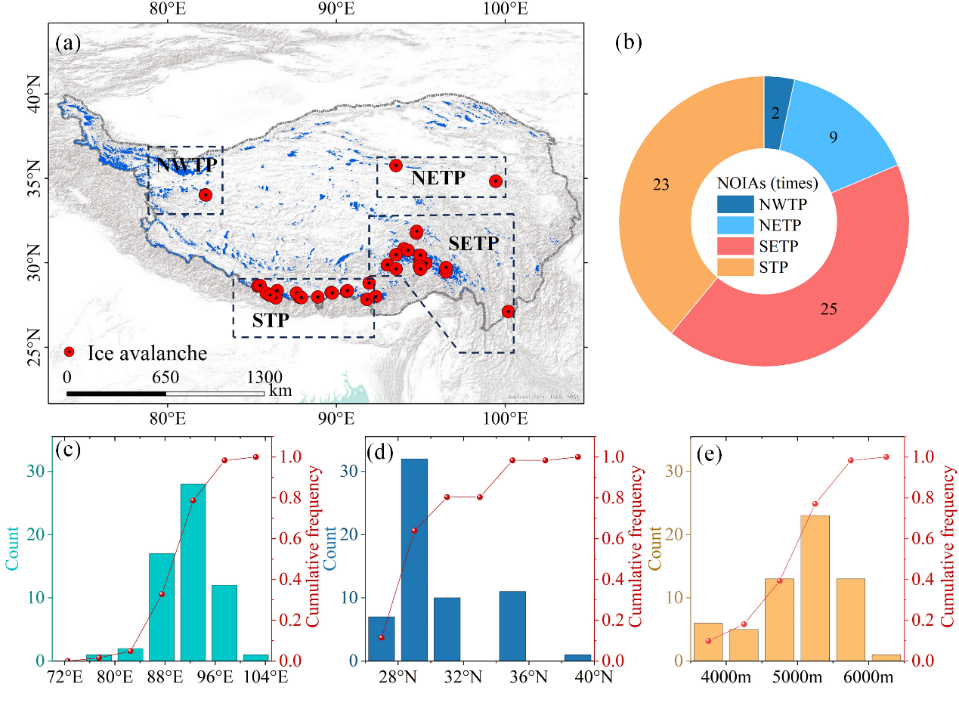
Fig. 1 Spatial patterns of ice avalanche events and regional variations across the Tibetan Plateau during 1960–2020 (Image by LI et al.)
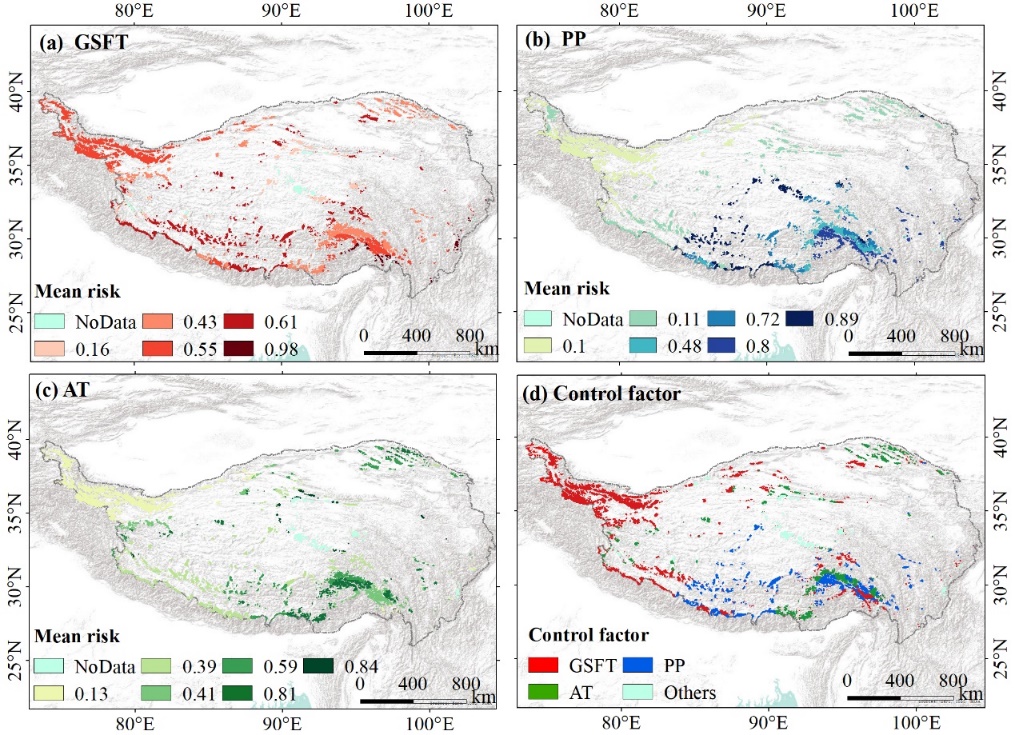
Fig. 2 Climatic mechanisms driving the spatial heterogeneity of ice avalanche activities across the Tibetan Plateau (Image by LI et al.)