
Phosphorus (P) is one of the key limiting nutrients driving aquatic eutrophication, and its transport, transformation, and fate fundamentally determine water quality and ecological security. With the increasing construction and operation of large dams worldwide, river hydrodynamics, sediment transport, and biogeochemical processes in sediments have been markedly changed, thereby reshaping P cycling and its spatiotemporal dynamics in the water and sediment systems. However, how P stability evolves in the water-level fluctuation zone (WLFZ) during long-term reservoir operation remains poorly understood.
To address this challenge, the team of Mountain Biogeochemistry at the Institute of Mountain Hazards and Environment, Chinese Academy of Sciences, integrated long-term hydrological and sediment monitoring data between 2004 and 2020 in the WLFZ of the Three Gorges Reservoir (TGR) along with laboratory P adsorption-desorption experiments to systematically characterize the migration, accumulation, and fraction transformation of P in both the water column and sediments during the reservoir operation. This study aims to elucidate the synergistic mechanisms by which fine-sediment deposition and P fraction transformation regulate the stability of internal P.
The results showed that the successive operation of the TGR and upstream cascade reservoirs substantially reduced both the input and output of sediment loads. The weakened hydrodynamic conditions enhanced sediment sorting and continuously increased the proportion of fine-sediments, leading to the establishment of a new sediment transport equilibrium. Meanwhile, reservoir operation promoted the transfer and accumulation of P from the water column into bottom sediments. Compared with the pre-TGR period, total P concentrations in the water decreased by approximately 28%, whereas total P concentrations in the WLFZ sediments increased by nearly 1.3-fold and continued to rise over time. Spatially, the P concentrations in the water gradually declined toward the dam, while sedimentary P exhibited an opposite trend, forming a distinct pattern of decreased P pool in the water but elevated P in the sediments. Fine-sediment deposition not only increased the specific surface area of sediments but also facilitated the enrichment of iron/aluminum (hydro)oxides and organic matter, thereby promoting P fraction transformation and ultimately enhancing sediment P retention. Consequently, the sediments evolved into an effective “buffer” regulating internal P cycling.
This study demonstrates the coupled accumulation of fine-sediments and the transformation of sediment P fractions as the key mechanisms responsible for enhancing P stability in the WLFZ during long-term operation of large reservoirs. The findings highlight that the dynamic regulation of nutrient cycling by large reservoirs should be explicitly incorporated into water quality prediction models and reservoir management strategies. These results provide important theoretical support for mitigating eutrophication risk and improving nutrient management in large regulated river-reservoir systems. The results, entitled Synergistic roles of fine-sediment deposition and phosphorus fraction dynamics in internal phosphorus stability during large reservoir operation, has been published in Water Research. The first author is ZHANG Jie (Ph.D candidate), and the corresponding author is Prof. BING Haijian. This research was financially supported by Science and Technology Projects of Xizang Autonomous Region and Sichuan Science and Technology Program, China.
Related paper: "Synergistic roles of fine-sediment deposition and phosphorus fraction dynamics in internal phosphorus stability during large reservoir operation," Water Research. DOI: https://doi.org/10.1016/j.watres.2026.126535
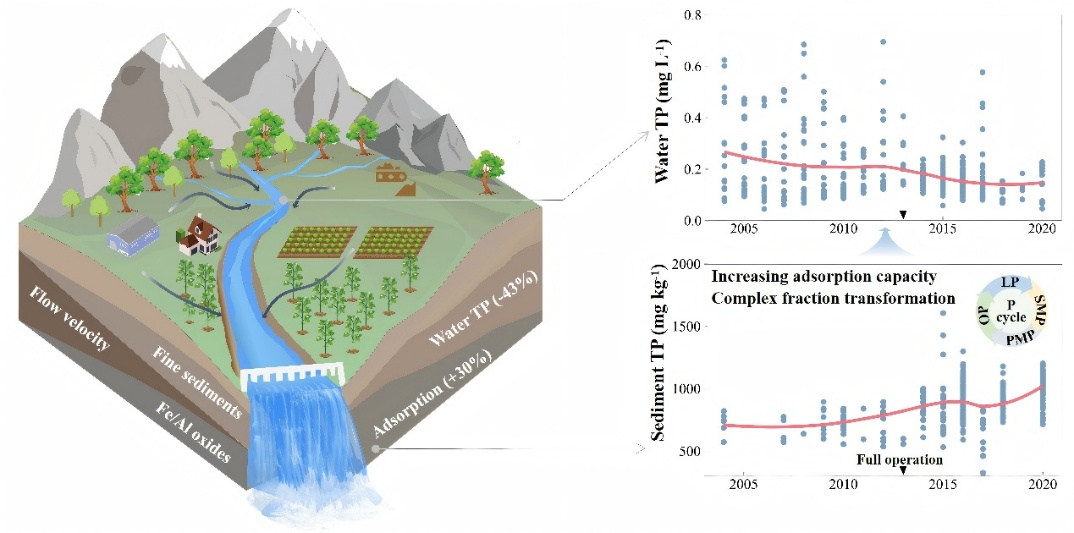
Figure 1. Spatiotemporal variations in the phosphorus (P) concentrations in the water and sediments in the water-level fluctuation zone of the Three Gorges Reservoir. (Image by ZHANG et al.)

Figure 2. Effects of sediment physicochemical properties and phosphorus fraction transformation on the phosphorus release in the water-level fluctuation zone of the Three Gorges Reservoir. (Image by ZHANG et al.)