
Recently, the research team of Mountain Biogeochemistry at the Institute of Mountain Hazards and Environment (IMHE), Chinese Academy of Sciences, in collaboration with several domestic and international research institutions, organized a special issue in the journal Plant and Soil titled “Biogeochemical Cycling Along Soil Chronosequences: Implications for Ecosystem Development and Vegetation Restoration.” This special issue systematically reviews the latest advances in soil chronosequence research for revealing nutrient cycling patterns during ecosystem development, providing an important scientific basis for the ecological restoration of increasing bare surfaces worldwide.
As global change and human activities intensify, the area of bare, vegetation-free surfaces such as glacier retreat forefields, geological hazard and engineering disturbance sites, and abandoned mining lands continues to expand. The subsequent development of ecosystems in these areas is constrained by factors such as soil nutrient availability and has therefore attracted widespread attention. Soil chronosequences formed on deposits such as glacier forelands, volcanic sediments, and sand dunes are ideal settings for studying the interactions between nutrient cycling and ecosystem development. Investigating changes in soil nutrient availability during soil development, the successional patterns of plants and microbes along soil chronosequences, and the feedback mechanisms between soil nutrient bioavailability and ecosystem function improvement can provide important guidance for ecological restoration in weakly weathered areas such as geological hazard deposits, abandoned mining lands, and high-altitude bare lands.
Building on the core outcomes of the first international conference on “Soil Chronosequence Nutrient Cycling and Its Implications for Ecological Restoration,” held in Chengdu in 2024, the special issue brings together multiple cutting-edge studies. Using the “space-for-time” research paradigm, it provides in-depth analyses of soil chronosequences under diverse global environmental conditions, including glacier retreat areas, coastal zones, mining areas, and ancient sand dunes, revealing how soil age, climate, and biological processes jointly shape ecosystem trajectories. The key findings of the special issue offer new perspectives for ecological restoration practice:
First, regarding nutrient cycling mechanisms, the studies reveal the complex long-term dynamics of key elements. Research along the Hailuogou glacier retreat chronosequence shows that nitrogen cycling within the ecosystem can shift from an open to an efficient, internally recycled state within a century. Phosphorus research found that, in a two-million-year dune chronosequence, water balance had only a weak effect on soil organic phosphorus transformation. The studies also found that trace elements required for biological nitrogen fixation (iron, vanadium, and molybdenum) were depleted faster than phosphorus in soils, but organic chelation could maintain their bioavailability in old soils. This suggests that future vegetation management should focus on nitrogen retention and supplementation, while phosphorus supplementation can rely on building an efficient phosphorus self-cycling system.
Second, regarding carbon dynamics and microbial ecology, a study spanning a two-million-year chronosequence identified a “paradox”: although the biomass of arbuscular mycorrhizal fungi declined, the glomalin-related soil protein (GRSP) they secreted increased, which was linked to soil acidity, texture, and host plant richness. Meanwhile, in a subalpine fir forest study, three independent methods confirmed that microbial carbon use efficiency was significantly higher in mature old-growth forests than in mid-successional forests and was strongly positively correlated with soil organic carbon stocks, providing microscale evidence for why old-growth forests store more carbon.
Finally, regarding plant restoration strategies, the studies provide theoretical support for moving away from a “simple fertilization” model. Long-term excessive nutrient input, especially phosphorus addition, may have lasting inhibitory effects on the recovery of native vegetation. In extremely phosphorus-poor tropical forests, higher plant diversity can buffer productivity declines caused by soil aging through extensive species-specific adaptation mechanisms, indicating that restoration strategies relying on natural successional processes are more resilient.
Based on research in the Hailuogou Glacier retreat area on the Gongga Mountain, the special issue proposes an ecological restoration strategy of “both activating phosphorus and fixing nitrogen” for weakly weathered pedogenic regions. Enhancing the bioavailability of soil nitrogen and phosphorus can serve as an effective pathway for increasing biomass and strengthening carbon sink capacity. This research was featured as the cover article of the special issue.
The above research was completed jointly by the IMHE, University of Western Australia, Karlsruhe Institute of Technology, South China Botanical Garden of the Chinese Academy of Sciences, Shandong Agricultural University, etc., with support from the National Natural Science Foundation of China, and the Science and Technology Research Program of Institute of Mountain Hazards and Environment, Chinese Academy of Sciences.
Related link: https://link.springer.com/article/10.1007/s11104-026-08707-0
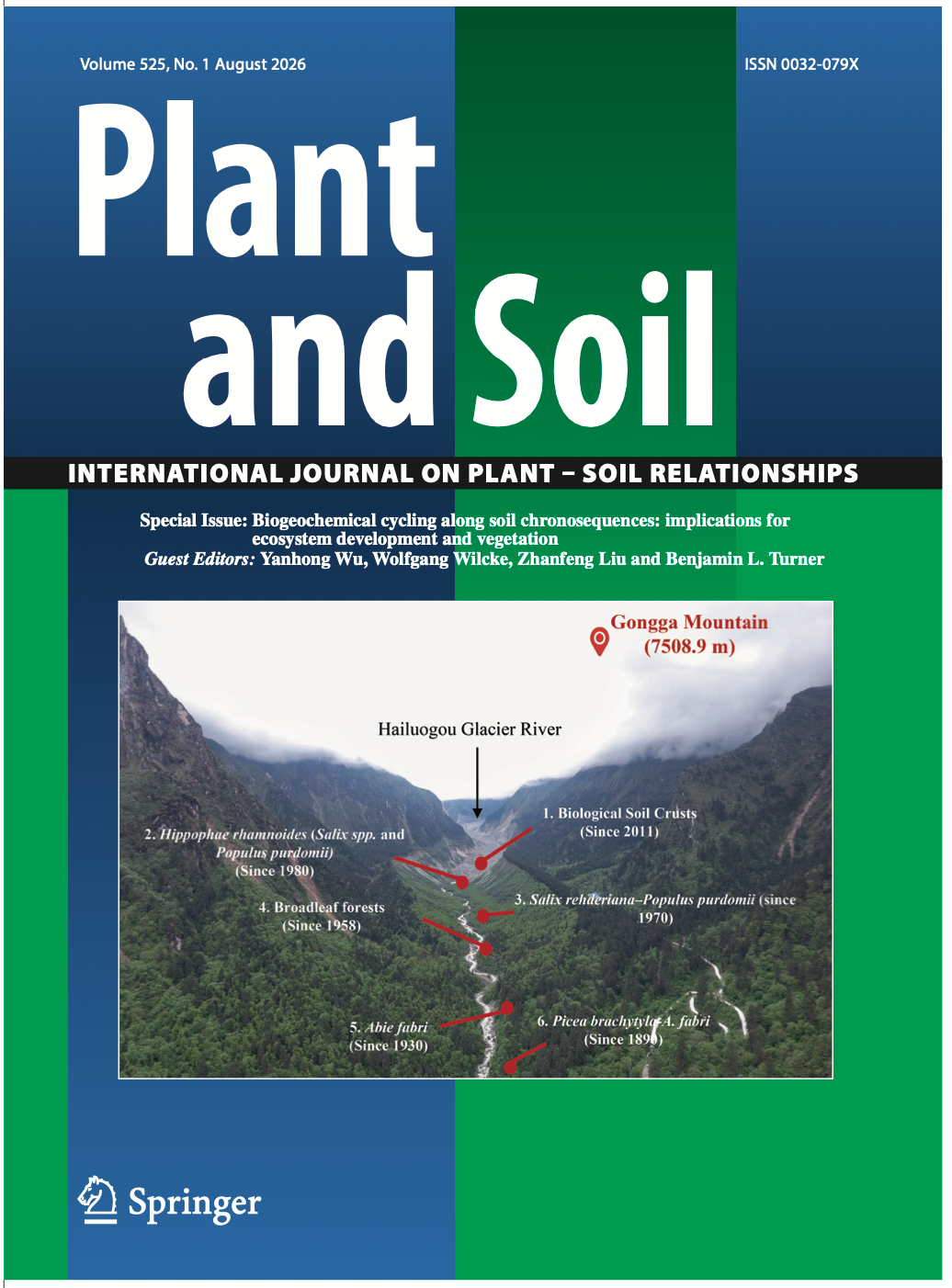
Fig. 1 Cover of the Plant and Soil special issue (Image courtesy of Springer)