
Phosphorus (P) is an essential nutrient for plant growth and ecosystem development, yet most soil P is strongly associated with metal elements such as aluminium (Al), iron (Fe), and calcium (Ca), making it poorly available for direct plant uptake. To overcome P limitation, plants have evolved diverse phosphorus-acquisition strategies (PAS), including mycorrhizal symbiosis, carboxylate release, phosphatase secretion, and morphological modifications of root systems. However, a fundamental question has remained unresolved under natural field conditions: which specific soil P pools are mobilized by different plant P-acquisition strategies?
A recent study by the Institute of Mountain Hazards and Environment, Chinese Academy of Sciences, provides a new approach to address this question. Using Pinus armandii, a widespread ectomycorrhizal tree species in subtropical southwest China, the researchers demonstrated that ectomycorrhizal (ECM) roots primarily mobilize aluminium-bound inorganic P through carboxylate release. More importantly, the study developed an approach that directly links plant nutrient-acquisition strategies with specific mineral-associated soil P pools.
(1) A new framework for identifying the soil P pools targeted by plant nutrient-acquisition strategies
Traditionally, studies of plant P acquisition have focused on quantifying root exudates, phosphatase activity, mycorrhizal colonization, or changes in operationally defined soil P fractions. However, a given P fraction extracted by a particular solution may comprise P associated with multiple metal elements, making it difficult to identify the precise chemical forms of P mobilized by plants. Consequently, conventional P fractionation alone cannot determine which specific metal-associated P pools are targeted by plant roots and their associated microorganisms. Establishing a direct link between a particular biological P-acquisition strategy and a specific mineral-associated P pool has therefore remained challenging, especially in natural soils.
To overcome this limitation, the researchers incorporated P–metal stoichiometry into the Hedley fractionation framework. In addition to quantifying soil P fractions, they examined the relationships between P and Al, Fe, and Ca within different extracts. By comparing these P–metal relationships between rhizosheath and bulk soils, the researchers were able to determine whether particular plant P-acquisition strategies preferentially depleted P associated with specific metal elements. This approach provides a new means of establishing mechanistic links between plant nutrient-acquisition traits and the specific soil nutrient pools they mobilize.
(2) Ectomycorrhizal roots are the major source of carboxylates
The researchers investigated P. armandii along an altitudinal gradient from 2000 to 3000 m in subtropical southwest China. Bulk soil, rhizosheath soil, and root tissues were collected to examine how different P-acquisition strategies contributed to the mobilization of poorly available soil P.
A combination of complementary approaches was used to characterize plant P-acquisition strategies. Carboxylate release was assessed using aluminon–agarose assays and leaf manganese concentrations ([Mn]), whereas phosphatase activity was quantified using fluorometric and staining methods. These measurements were combined with ECM colonization and comparisons between ECM root tips and non-mycorrhizal root segments.
The results showed that carboxylate exudation was substantially greater from ECM root tips than from non-mycorrhizal root segments (Fig. 1a,b). Sites with higher ECM colonization also exhibited stronger gel discoloration and higher leaf [Mn], collectively indicating that ECM roots were the major source of carboxylates in the rhizosphere. These findings provide direct field evidence that ECM roots play a dominant role in releasing the chemical agents responsible for mobilizing poorly available P in this ecosystem.
(3) ECM-mediated carboxylates mobilise aluminium-bound inorganic P
The most important finding emerged from integrating plant P-acquisition traits with soil P–metal stoichiometry. Across all elevations, NaOH-extractable inorganic P (NaOH-Pi) was significantly associated with Al, but not with Fe or Ca, indicating that this P fraction was predominantly Al-bound inorganic P. Importantly, NaOH-Pi was consistently lower in rhizosheath soil than in bulk soil, with rhizosheath soil containing, on average, 22.7% less NaOH-Pi. Moreover, the relationship between NaOH-Pi and NaOH-Al differed markedly between rhizosheath and bulk soils: the slope of NaOH-Pi versus NaOH-Al was 36.6% lower in rhizosheath soil (Fig. 1e), indicating the preferential depletion of Al-bound P in the immediate vicinity of roots. This pattern was further supported by the negative relationship between rhizosheath NaOH-Pi and leaf [Mn], an indicator of rhizosphere carboxylate activity.
In contrast, evidence for the mobilization of Al-bound organic P was restricted to the lowest elevation. At this site, phosphatase activity was significantly higher in ECM root tips than in non-mycorrhizal root segments (Fig. 1c, d), while phosphatase activity in rhizosheath soil exceeded that in bulk soil. Together, these results demonstrate that ECM-mediated carboxylate release preferentially mobilizes Al-bound inorganic P, whereas phosphatase-mediated acquisition of Al-bound organic P may occur under more severe P limitation.
Notably, other metal-associated P pools showed no comparable depletion patterns between rhizosheath and bulk soils. This distinction is critical because it moves beyond the general conclusion that roots mobilize “poorly available P” and enables the identification of the specific chemical P pools targeted by particular P-acquisition strategies.
This work may be extended beyond P to address broader questions in plant–soil interactions. In particular, it offers a conceptual and methodological basis for investigating how roots, mycorrhizal fungi, and other nutrient-acquisition strategies construct localised nutrient niches by selectively mobilizing mineral-associated nutrient pools. This methodological advance bridges plant functional ecology and soil geochemistry, opening new opportunities to investigate how plants and their microbial symbionts selectively access mineral-bound nutrients in natural ecosystems.
The findings were recently published in Journal of Ecology under the title “Pinus armandii ectomycorrhizas mobilize aluminium-bound phosphorus via carboxylates along a subtropical altitudinal gradient.”
Full text link: https://besjournals.onlinelibrary.wiley.com/doi/10.1111/1365-2745.70411
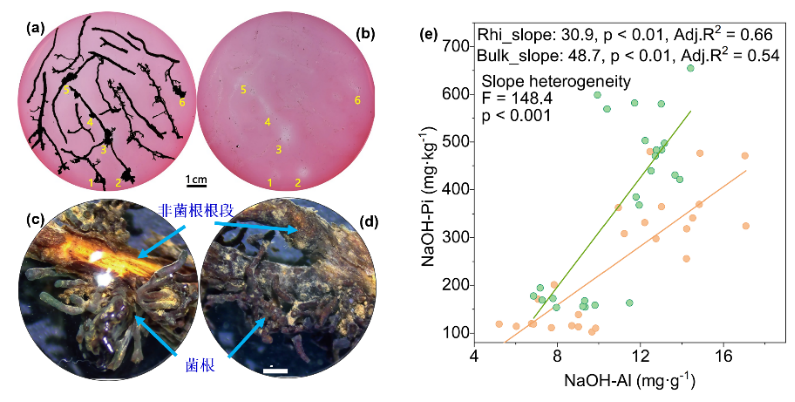
Figure 1 Pinus armandii primarily mobilizes aluminium-bound phosphorus through ectomycorrhizal carboxylate release. (Image by ZHOU et al.,)。
Note: The white areas marked by yellow numbers in panels a and b indicate carboxylate release by the ectomycorrhizal fungi associated with P. armandii. The dark blue areas in panels c and d indicate phosphatase release by ectomycorrhizal fungi. Panel e shows that NaOH-extractable P was significantly positively correlated only with Al, and that the slope of the relationship between NaOH-Al and NaOH-Pi was significantly lower in rhizosheath soil than in bulk soil.