
1. Research Background and Scientific Question
Geophysical granular flows, including landslides, avalanches, and debris flows, commonly contain particles with continuous size distributions ranging from fine grains to boulders. During motion, particles of different sizes undergo vertical segregation, forming coarse-rich and fine-rich layers that influence flow mobility and deposition structures. However, most existing segregation theories were developed for idealized bidisperse mixtures. A fundamental unresolved question is whether segregation laws derived from two-size systems can be applied to natural granular materials with continuous particle-size distributions.
2. Innovative Methods and Major Findings
This study employs a coupled computational fluid dynamics–discrete element method (CFD–DEM) framework to investigate vertical size segregation in fluid-saturated granular mixtures with continuous particle-size distributions.
The study first establishes a continuous segregation–diffusion model for bidisperse systems and quantifies the effects of particle-size contrast, particle concentration, and fluid properties on segregation and diffusion. The model is then extended to polydisperse systems with continuous size distributions and evaluated using different particle-size distributions, including Gaussian, lognormal, uniform, and power-law distributions.
The results demonstrate that models based on bidisperse particle interactions can successfully describe simple two-size mixtures but exhibit systematic deviations when applied to continuous-size systems. In particular, under stronger viscous effects or enhanced buoyancy conditions, these models overestimate segregation rates and final stratification. The findings reveal that polydisperse segregation cannot be represented as a simple summation of pairwise size interactions; instead, collective interactions among multiple particle sizes play an essential role.
This study identifies the applicability limits of current segregation theories and provides a foundation for developing predictive models for realistic geological granular flows.
3. Project Support and Publication
The study was published in Journal of Geophysical Research: Solid Earth. This work was supported by the National Key R&D Program of China (2024YFE0104200), the National Natural Science Foundation of China (Grants U24A20618, 12572471, 42501105), and the Sichuan Science and Technology Program (2024NSFSC0043, 2026NSFSC1114).
4. Paper Link
Cui, K. F. E., Zhou, G. G. D., Graciosa, J. C. A., Jing, L., Lu, X., Bossi, G., & Moresi, L. (2026). Modeling vertical size sorting in geophysical granular flows: Role of particle size compositions. Journal of Geophysical Research: Solid Earth, 131, e2026JB034408.https://doi.org/10.1029/2026JB034408
5. Figures
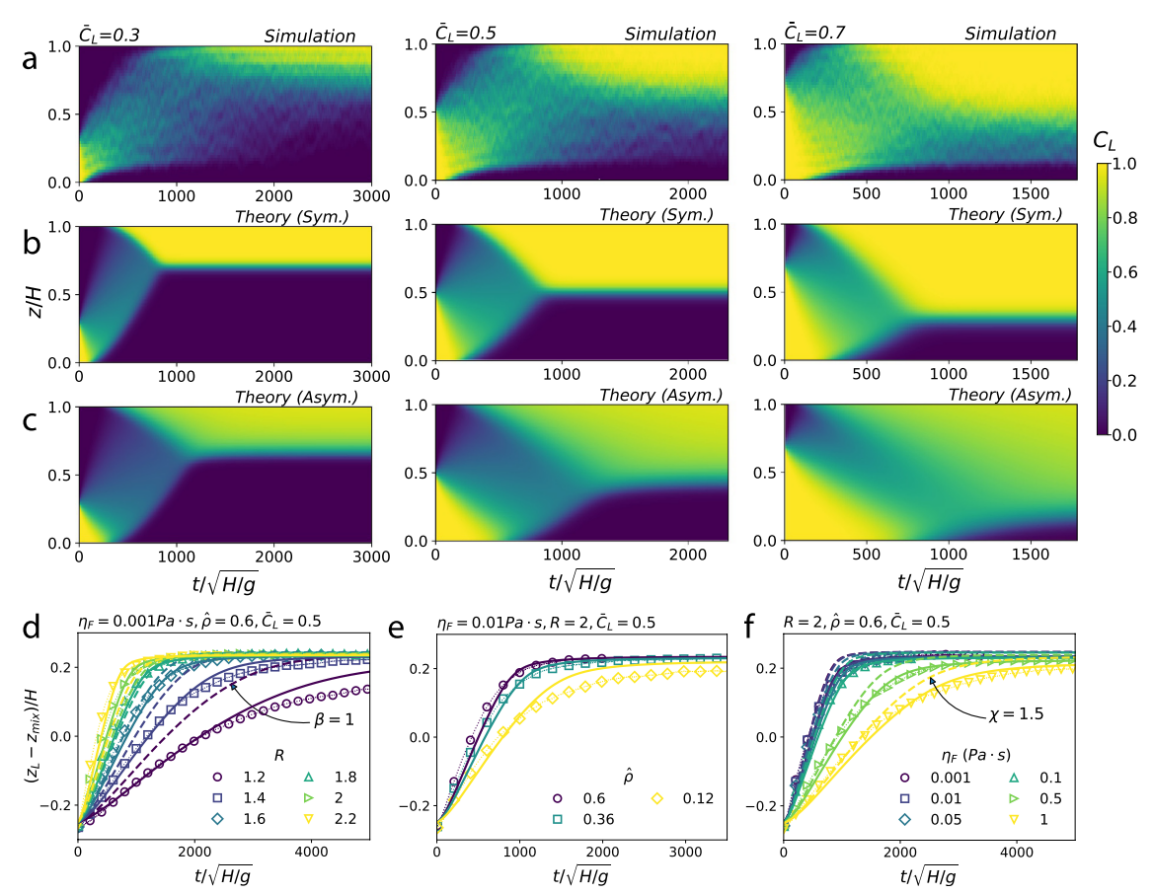
Figure 1. Comparison of CFD-DEM simulation and continuous model for the separation process of fluid-saturated bimodal (Image bu CUI et al.,)
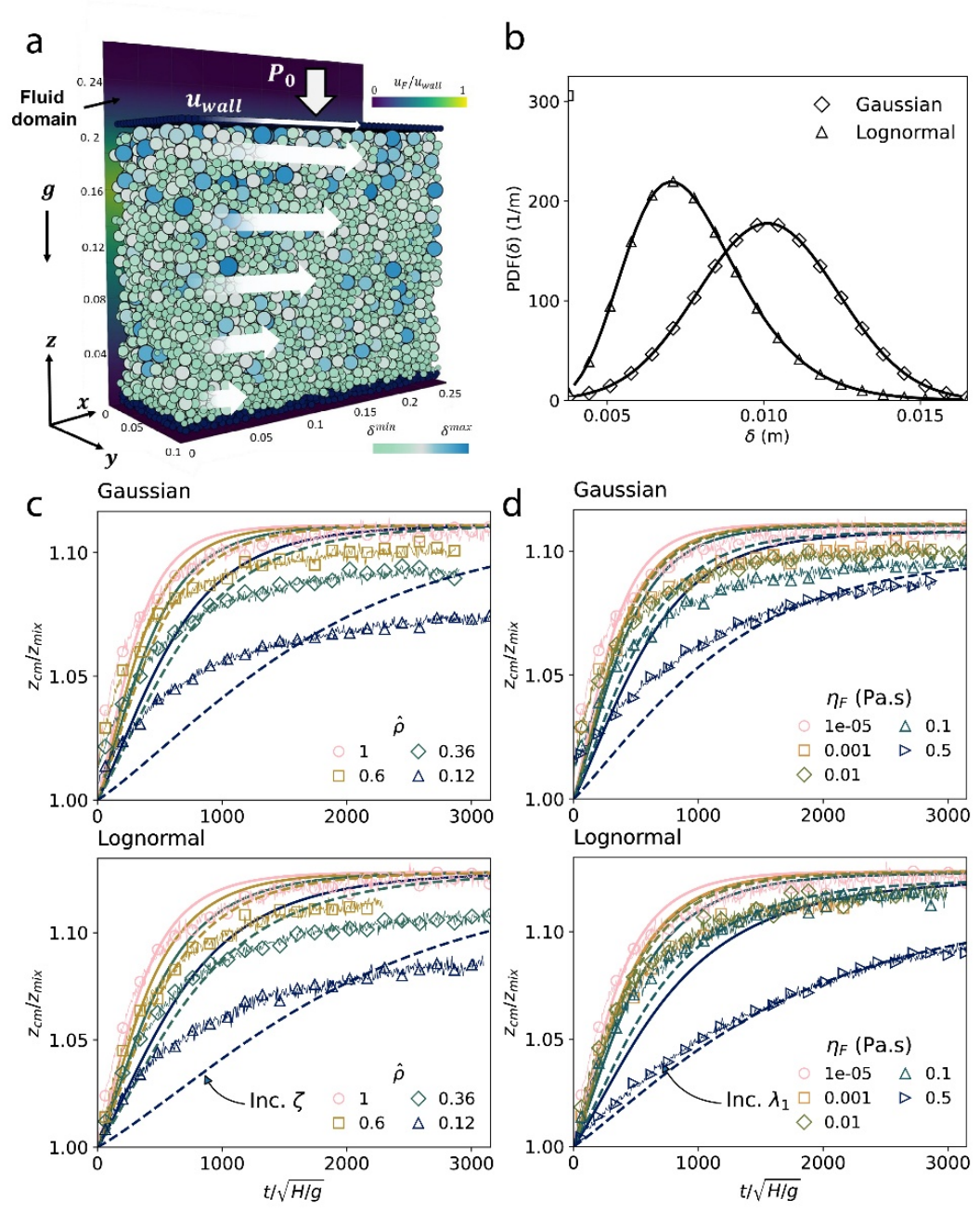
Figure 2 Comparison between the continuous model and CFD–DEM simulations for polydisperse granular systems, demonstrating the limitations of extending bidisperse theories to continuous-size materials. (Image bu CUI et al.,)